Loading article

Cookie preferences
We use strictly necessary storage for site operation and optional categories for experience, measurement, and marketing. Choose what Gelectric can use, and update it any time from Cookie Settings in the footer.
Cookie preferences
We use strictly necessary storage for site operation and optional categories for experience, measurement, and marketing. Choose what Gelectric can use, and update it any time from Cookie Settings in the footer.

Gelectric Editorial Team

Introduction
In this case study, we explore the implementation and impact of our electrical energy monitoring solution on a sea vessel equipped with a Variable Frequency Drive (VFD) application for its consumption reducing. Our goal was to achieve determined significant power reduction and energy savings, ultimately translating into substantial cost savings for the vessel's operations.
Background
The subject of this case study is a commercial sea vessel that has adapted VFD technology for its seawater pumps to reduce fuel consumption and carbon emissions.
Problem Statement
The vessel's seawater pump operated automatically after the VFD application, but there were concerns about some points:
Objectives
The primary objective of this case study was to accurately measure and verify the energy savings achieved by the vessel after implementing the VFD application for its seawater pumps. This involved quantifying the actual energy consumption and cost savings, ensuring data accuracy, and monitoring the health and performance of the seawater pumps to confirm reduced wear and tear and extended equipment lifespan. Additionally, the study aimed to analyze energy consumption patterns to further optimize energy use and identify potential areas for additional savings.
Receive our monthly maritime intelligence report directly in your inbox.
Expand your knowledge with these recent publications.

Introduction This document outlines the Speed and Consumption Performance solution developed by Gelectric. Our primary objective is to provide a precise, data-driven understanding of the relationship between vessel speed, fuel burn, and...

Implementation of the Electrical Energy Monitoring System
To complement the VFD solution, we integrated our electrical energy monitoring system, which involved:
Data Collection and Analysis
We collected energy consumption data over a three-month period, tracking key metrics such as:
Energy Consumption Reduction
Without VFD:
Maximum Daily Consumption: 1992 kWh/day. Selected period for this case study is from 1 April to 1 June 2024.
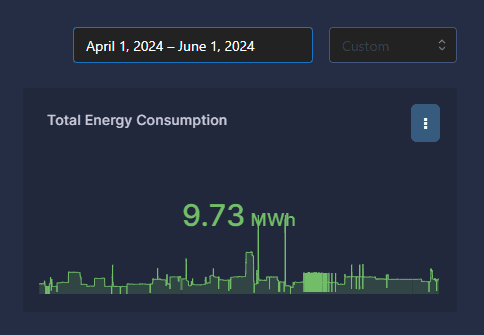
Total Estimated Energy Consumption (April 1 to June 1, 2024): 123.504 MWh. With VFD:
Peak consumption is on 5 May with 299 kWh / day
Minimum consumption is on 14 April with 111 kWh / day
**Total Energy Saving:**123.504 MWh – 9.73 MWh =****113.774 MWh
This remarkable implementation resulted in an impressive 92.12% reduction in energy consumption, showcasing the significant impact of the VFD solution.
Conclusion
The implementation of our electrical energy monitoring solution, combined with the VFD application for the seawater pump, resulted in substantial energy and cost savings. This case study highlights the importance of integrating advanced monitoring systems with energy-efficient technologies to achieve operational excellence and financial benefits.
Team Gelectric
To learn more please feel free to contact us:

Marine vessels rely on pumps for various critical onboard systems. These include ballast water management, cooling, firefighting, lubrication, fuel transfer, and bilge handling. Proper pump performance is not just operationally essential;...
In today's world, where energy efficiency and sustainability are paramount, understanding and managing energy consumption has become crucial. At Gelectric, we specialize in providing state-of-the-art Electrical Energy Monitoring solutions...